

Advertisement
Contact us for information and rates.

Home > ...
Enter your email address to join our mailing list and receive our weekly newsletters:

Harvard University - GSD (Quilian)
the last post
Three and a half years ago my wife, Izabela, and I put everything that fit in a mid-size sedan and left the high desert of New Mexico to the shores of the Charles river in Cambridge. All this just to have an excuse to start a coveted school blog at archinect. Over 100 posts later, and six-months after graduation, it is finally time to end this school blog. But it won't be long until you see me here again from the other side of the pedagogical divide (details below).

Before I go on I would like to thank everyone that read and commented on this blog. Now to tie some lose ends (sorry, this is a long post):

So... What happened with thesis?
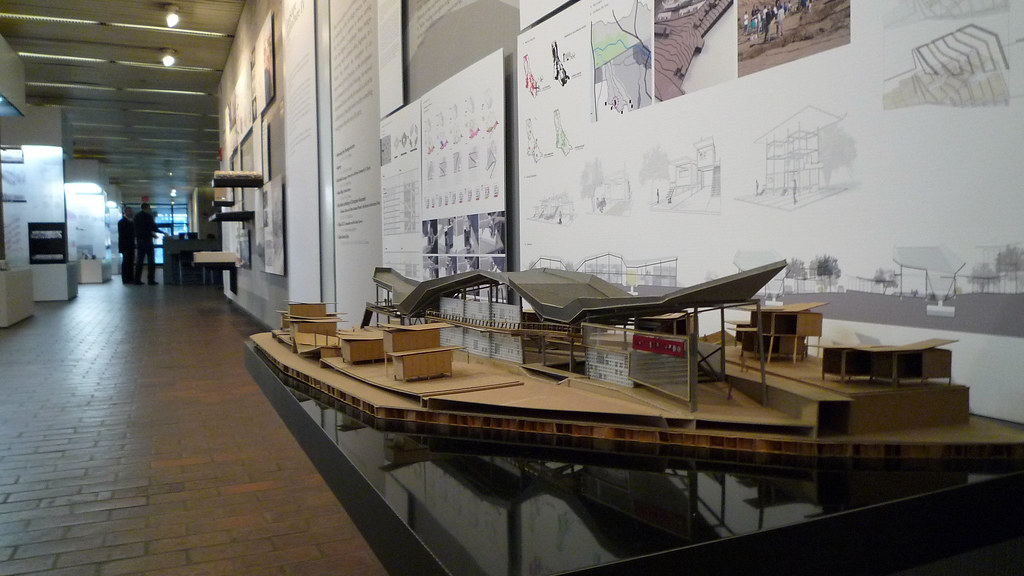


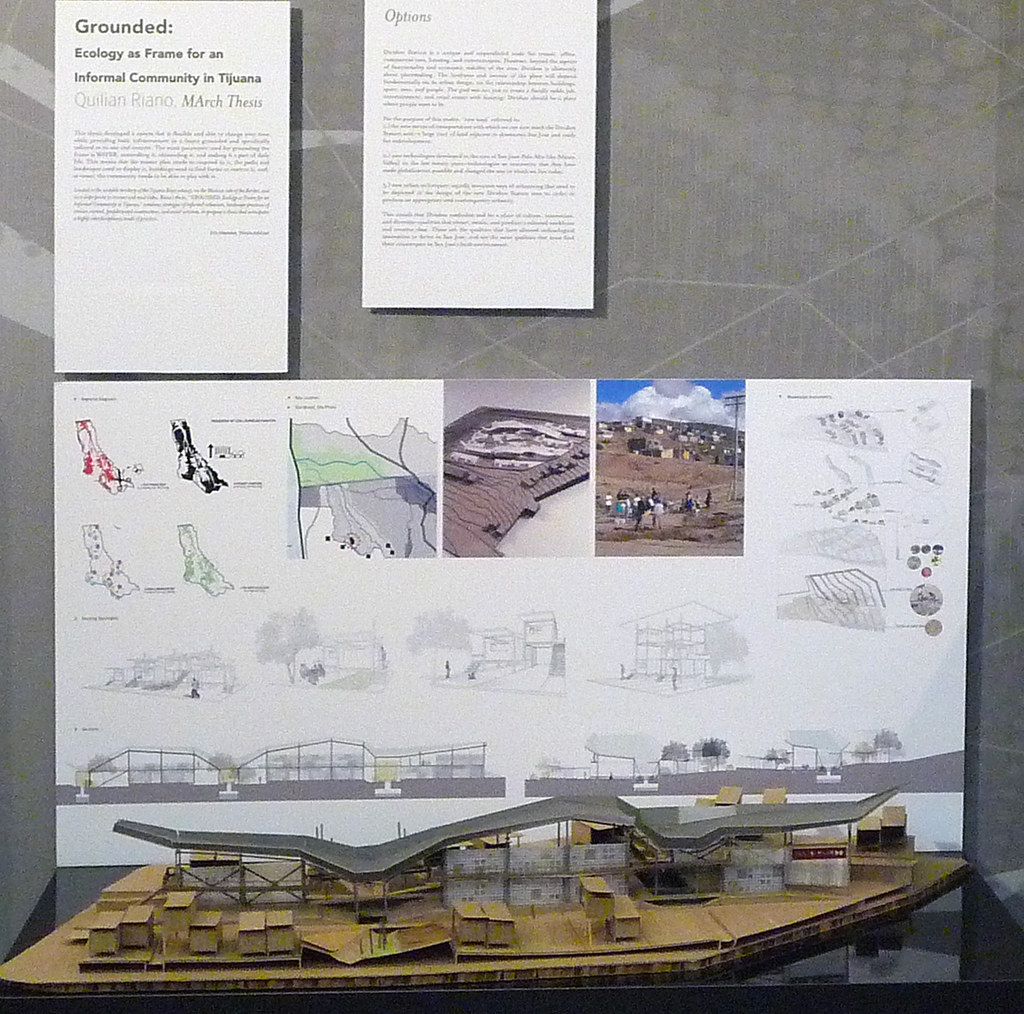
GROUNDED! was selected for inclusion in this year's PLATFORM exhibit and publication. I was pleasantly surprised to find myself among the theses of my friends, and Chinatown INSERT! collaborators, Marrikka Trotter and Trevor Patt. We were grouped with projects that deal with Authorship, joining studio work and lectures by Joshua Prince Ramus, Rodolfo Machado, Jose Luis Vallejo and Belinda Tato.

FULL THESIS BLOG


So... What did I learn anyway?

generally?
I came into the GSD with three broad interests: 1- interactivity, technology, flexibility, and modularity (I view media/blogging as part of this interest), 2-ecology and building performance, and 3-expanding the role of design (and the designer by extension) into larger social/political issues. I am leaving still interested in the same issues, but with a fuller understanding of each of these issues. The GSD was particularly well suited for my interests because of the access I had to landscape architecture and urban design. In fact, studying landscape theory (a lot of it that coming from architects like Waldheim, Allen and Koolhaas) was what helped me formulate the arguments I used in my thesis and that I will continue to use as I teach/practice. In this regards I am glad to see that the GSD is making an effort to have the different departments talking to each other more and more.

about blogging?
When I began this blog I half expected that it would be left to gather dust eventually. One I started, however, I began to learn that far from a distraction, blogging could be a key part of my learning experience at Harvard. Having to write really forced me to start weaving a narrative across classes, studios and semesters, uncovering connections I may have missed otherwise. It also helped me to quickly explore and learn something from things that ended up being dead-ends.

outside of class?
Three of my favorite extracurricular GSD projects:
-trays - I am very proud to have been a co-founder and the first editor-in-chief of this new web-journal for the GSD student body.
-GSD Ecological Urbanism - This team-blog was so well received that parts of it are going to be included in the book the GSD is producing with material from the conference.
-Chinatown INSERT! Marrikka, Trevor, and I just visited the insert after 2-months of operation and it was filled to capacity. The flexible design allows them to hold readings for children, English courses for the elderly, and Saturday night movie screenings. This is one of the best teams I have been a part of and the final product shows it.

So... What's next?

teaching!
As I say goodbye to this blog soon I will say hi! to a teaching blog as next semester I will begin teaching design studios at Wentworth Institute of Technology. At Wentworth I am teaching a Housing and Community Design studio working with the students and a local Bostonian community to identify their urban, landscape, and architectural needs.
Spring 2010 will also see me going down to NYC once a week to co-teach a studio with Teddy Cruz at CCNY. We are guiding ten students in the design of a community in the southern periphery of Bogota.

dsgn agnc!
Fellow GSD grad Dk Osseo-Asare and I have started an activist design practice we call DSGN AGNC (website and blog coming soon). We currently have some research and design projects, focused in Latin America and Africa, more details to come.

publication!
As I said before I am probably getting a new blog here in archinect. I am also excited to be working with editor Nancy Levinson on a few pieces for places journal, beginning in January.

I could not end this blog without thanking the following people for their time and help while at the GSD:
Teddy Cruz, Eric Howeler, Christian Werthmann, Carl Steinitz, Mohsen Mostafavi, Paul Nakazawa, Charles Waldheim, Toshiko Mori, Alan Altshuler, Margaret Crawford, Thomas Schroepfer, Timoty Hyde, Amale Andraos, Melissa Vaughn, Shauna Gillies-Smith, Martha Schwartz, Sibel Bozdogan, Laura Snowdon, William Mitchell and Lluis Ortega.

bye

q
DISCO Project 3: City Hall Plaza
The GSD's Career Discovery program finished a little over a week ago with a final project in Boston's famed City Hall Plaza. A challenging site for any studio, but for a 2 week project with brand new students even more so. The students, however, rose to occasion and made proposals with vision and energy.

We began the process this time by doing site research. As in the previous projects I wanted the analysis to give my students a point to start from. Thus I asked each of them to make an analytical drawing that looked at one issue closer and tried to understand the architectural elements that make that condition possible. Some chose light, sound, wind, edges as they relate to public/private relationships, plazas, etc...

They then began the hard work to develop that concept. They used it to develop the program, the sequence of spaces, circulation, structure, facades, the ground condition, and the siting of the building.

By the final we had three main typologies emerge, the sprawling building that took the entire site in front of city hall, the mid-rise building sited within the site, and the tower with a landscape condition. We reviewed the projects by discussing them within these typologies in the final review. The final jury included many designers that also know a lot about fabrication, among them archinect's own Aaron W. AKA pixelwhore. In what can only be described as a special treat we also had the project manager that oversaw construction of the City Hall building and plaza, Henry Wood, with us.

To see results of this two-week project from three of the students that put their projects in flickr go here:
a
b
c

Full Image Pool:
arch7-2009gsd-disco

image image

Both Images above taken by Stefan Zebrowski-Rubin.
Top: Aaron and Matthew reviewing
Bottom: Patricia listens to the comments by landscape architect Masako, Maciej, and Q.

FINAL THOUGHTS:
It is fitting that as anything in design this ended up being a lot more intense than I originally imagined. It was a lot of work but it was worth it to see eight people with different skills begin to use the design process to come up with projects that neither them nor I would never have imagined at the outset.

I now look forward to the post-GSD world. I will probably finish this blog with an entry or two over the next few weeks summarizing my time at the GSD, my documentation of that time using this blog, and I will tentatively look towards an uncertain (yet exciting to me) future.
DISCO Project 2: The two house project
Among the most difficult things about teaching Harvard GSD's Career Discovery (DISCO) is to be clear on what you are actually teaching. Students come with expectations of learning how to 'build a building' and are surprised to be taught the architectural process instead. Furthermore, although all my students seem to be interested in architecture for grad school the course should strive to teach them something they can take with them even if they choose not to go into the field.

Until this moment all I have come up with is that I am teaching them an alternative process to the scientific method, which after all is what most of us learn as children. In architecture there really are not any hypothesis and no replicable final results. The best you can hope for is to have stuck to your process as much as possible and that it yields a final product with coherent, and systematic internal logics. How would you describe our process?

PROJECT 2 PROCESS

For the second project (a two-weeker this time) the students and I tackled a classic architecture school problem: two houses in one lot. My studio began with me asking the students to watch TV and or a movie during a weekend to bring me the characters or set of characters central to the plot. I asked them to make sure to not bring any characters that have binary relationships (good vs. evil, etc...). I wanted subtle and even ambiguous relationships.

All the students then analyzed the relationship and found a spatial condition that began to describe it. The next step was to do a set of analytical watercolors of that condition. This was a hard exercise, but one that I thought would go to the heart of the problem. In order to design two independent yet interlocked houses it is important to first understand what the relationship between the two is. It also taught the students to analyze and abstract the conditions out of which you must make architecture.

The next was a prescriptive exercise given to all the architecture students. In it the students were supposed to stack two sets volumes around a void. I asked my students to use their analytical watercolors to bring ideas into this otherwise mechanical exercise.

I think the hardest thing about this exercise (across the studios) was for students to trust the process. Houses, after all, are something that we all think we know. We live in one, we know what a kitchen is and it is hard to abstract it into a series of volumes. However, I think the process my studio took on the first project and the analytical beginning to this one prepared the students to begin to trust their own work and not jump the gun too much.

The final review went well. It was specially nice to have Archinect's resident HTC Phd'er, and my friend, aml in attendance as a juror. Thanks aml!

To see some of the results of this two-week project you can go to some of the student's flickr pages (those students that made sets, in no particular order):
a, b, c, d, e

or look at our studio flickr pool:
arch7-2009 GSD-DISCO

Up Next: DISCO Project 3: Re-Mixing in City Hall

image
Diagrams of the process
DISCO Project 1: The Stair Project
The only way to describe any 6-week design program, such as Harvard GSD's Career Discovery, is INTENSE. Intense for the administrators, instructors like myself, but specially for the students.

I empathize, back about ten years ago I did my first two semesters of design school in two six-week semesters over a summer, with studio meeting everyday. And one of those was with UF's infamous professor Bernard Voichysonk, a man known for being a GREAT professor who was rumored to occasionally destroy drawings and models (never happened to me). I did not sleep.

This is a little different as no one here is in design school and we are all aware of it. However, design is design and it takes a lot of time and it takes its toll on everyone. Some of my students decided that this was not for them and out of the eleven I started with we are down to eight.

This is the process we took during the first project.

The first week project was to design a new staircase for the Laurentian library, except we did not tell the students. Their job was to simply connect an abstract tall room to a long room.

This first project was so lose and open that I decided that what I would try to teach each student how to develop an architectural language.

I began the process by asking each of the eleven students that were working with me to bring me a stair and a staircase of their choosing. We then took that staircase and tried to find its main concept. The way the staircase shaped the space. We sketched that and tried to separate it from the stair. We then went out into different spaces in Harvard yard and sketched similar conditions in real stairs.

At that point we took all the sketches and tried to distill that concept in a watercolor. It was back in my second semester that Voichysonk (who worked for Joseph Albers) taught me how to make analytical watercolors. I had workshops for all the techniques used (focusing on quick and 'sketchy', if colorful, ways of working) and worked individually with each student to find their own individual spatial languages and logics.

Those watercolors served as the 'blueprints' for the design of the staircase. By this point each person had both a spatial concept and a burgeoning architectural language to work with.

The process this first week was clear but at the same time weirdly chaotic. I had to get to know my students, I had to teach them how to use all their tools and what the different media can do for them. Perhaps more importantly I had to remember what is like to not know what plans, scales, sections, etc... are. How to unlearn the archispeak that I have developed in the past ten years.

The week ended with a joint review with DK Osseo-Assare's studio. DK and I are good friends and invited other people that we are close to for the jury. The result was a fiery yet friendly critique (among the jurors) that the students loved as entertainment and pedagogy.

As the archinect blogger I obviously think that showing work and writing about it is an important thing for a designer to do, so I asked each of my students to make a flickr account to begin their digital portfolio.
Check out this one week project (in no particular order):

elaXderivat
Tatiana Rodriguez11
alec.bialosky
Jaclyn Jung
stefan_zr
Fanny_GSD
samjl45

Some of the students have not put up their pics.

Up Next... DISCO Project 2: The two house project (final review is tomorrow)

image image

Above from left: Q, Jonathan Evans, DK Osseo Asare
Below: Full crit mode

(photos of the crit by Patricia)
What's Next...
You know that moment of boredom you are supposed to feel after thesis is done? Well not for me... in fact I may be busier now!

24 hours after my final review and with little sleep I got on a plane to Madrid to do some research. I am working there on the next three books of the TransUrban series with Christian Werthmann, Thomas Schroepfer, and Andrew Tenbrink. I will post some pics soon, but we are studying, analyzing, and critiquing a couple of 'ecocities'.

The books are exciting but right now a lot of my attention is focused in the first week of my Career Discovery architecture studio. Eleven students from a variety of disciplines (from math to MBAs) and I are working together to find appropriate architectural languages for a variety of problems.

I will keep my blog open for the next few weeks to document my experience teaching this studio. Then I will say my goodbyes and hope that another GSD student takes over the blogging duties...
GROUNDED: Ecology as Frame for an Informal Community in Tijuana
All the Images Below can be found at a better resolution in my thesis blog and Flickr Set. (you can also click on some of them tosee them larger).

First of all, I want to thank everyone that helped me in the final push of the project, many staying with me until the wee hours of the morning for several days.

Big heartfelt thanks to:
Izabela Riano (MLA), Joaquim Mendoza (Architect), Stephanie Tam (MArch), Simon Bussiere (MLA), Melissa Guerrero (MLA), Jonathan Evans (MArch), Neil Freeman (MUP), Pedro Santa-Rivera (MArchII, MAUD), Ilana Cohen (MLA), Darwin Marrero (MAUD), and Linda Chamorro (MLA). I also want to thank Eric Howeler, Teddy Cruz, Shauna Gilles-Smith, Christian Werthmann, and Margaret Crawford for listening and working with me.

This would have been both harder and not as fun without all of you.

+++++

REGION
Strategies to improve the social condition and clean the water of the Los Laureles Canyon (Haven't really changed since Midterm).


The Following Masterplan is a prototype for the new communities with commercial and social services I am proposing above (All together diagram).


MASTERPLAN
The main issue the Masterplan deals with is WATER. How to control it, channel it, and how to make it a part of daily life. This means you need to be able to see it, your buildings need to react to it, and at times you need to be able to play with it.
Larger Version of this Axo


The masterplan uses a series of terraces to direct water into public landscape areas that run in the opposite direction. This water is channeled into six cisterns that in turn help shape the roofs and ground planes of two community sheds. Houses then plug into the community sheds for their utilities.

COMMUNITY SHED
HOUSING
The Housing is comprised of a cheap and interchangeable system. As with the rest of the elements of the thesis the main purpose is to collect water. The house if self is comprised of an aggregatable 3mx6m module. One is enough for a studio apartment, two are good for a single family housing, and then they can be aggregated into row housing and other typologies.


CONCLUSION
I began with the argument that frames and infills (see the poster) are the best way in which architects can operate in informal contexts. However, often these systems, trying to let anything happen anywhere, have been generic, siteless, and universalist to a fault. My thesis was trying to develop frame and infill systems that are grounded and tied to the natural systems in their site while still allowing for flexibility and change overtime.

This took me out of my comfort zone many times forcing me to understand landscape and urban planning better. I am glad that this happened as I feel that these type of projects need to happen in a holistic, interdisciplinary way. I was happy to have four MLAs, four MArchs, two MAUDs, and one MUP helping me at the end of the semester. This is something I hope to do more of as I transition into professional life.

FINAL REVIEW
The final review generally went well. The jurors seemed to buy the project and its premise. The major question that came up is ownership and how it is dealt in this project. My answer is that I want to continue to develop the concept, but right now I am thinking that people would not own their lot. They would instead buy into the large public infrastructure and own the pieces that make up their house. Afterall, this is a community of migrants into Mexico many of them who are there for only some time. When you leave you can sell pieces of your house to other people in the network of new communities using similar systems all over the Los Laureles Canyon.

MOVING FORWARD
Another aspect that the jury seemed to like is that this is a real need and a real project. I, with Teddy Cruz's support, will begin working with Oscar Romo (the non-profit client) soon. What I designed here may not be 100% what gets built but it will influence that final outcome.
less than 3 weeks left...
An update of my fruitful contradictions

T-Day is May 13th or 14th and the freaking out begins now!!

Liveblogging Koolhaas, Bhabha, Kwinter...
It is 6:30 and I got to go into the VIP door using a press pass... pretty sweet.

You can probably follow the action here (all weekend for the entire conference):
http://rosebud.design.harvard.edu/live.sdp
you can also follow it in our student blog.


LIVE BLOGGING:

8:38 - Ok, I am done. Personally, I am going to wait until the video goes on-line. I need to watch it again, specially to Bhabha. However, I have renewed energy to go back and work on my thesis. I think it is very much tied to the issues discussed here, and these are the issues that interest me. Time, Agency, and Environmentally Urgency. How can spatial design mediate these three conditions? How can we do it without being over-bearing?

I also want to add that I am happy to see this discussion at the GSD. It would be better, however, if it was encouraged in the studio.

8:34 - Kwinter brings back the idea of humility, we need to be willing to listen. Interesting coming in the context of informality.

8:30 - Bhabha says that he is interested in something he calls'informal intelligence'.

8:29 - Bhabha: there are moments in which the informal is exciting. That happens in times of plenty in which informal contexts thrive. When there is a downturn the informal becomes problematic.

8:26 - Koolhaas responds first - went to Lagos to study the informal. After ten years he began to understand that the informal happens within plans and frames. Framing the Informal.

8:23 - Kwinter: What is the Role of the INFORMAL? Ties it to junkspace and the ability to see energy and activity in places that are global but decaying. Has informality become the ultimate term to understand the city of the future?

8:21 - Bhabha: Good cities are like French cheeses... the worst they smell the better they are.

8:16 - Homi Bhabha brings in a very interesting perspective into the modernist conversation. He says that when the great political project that is modernism started these liberal states had colonies oppressing alternative modernisms.

8:13 - Kwinter claims that Koolhaas is looking at Lagos because the 'fun' things in western cities are dying. Kwinter then goes on to officially declare Manhattan Dead. Long live Manhattan!

8:12 - After Koolhaas and Kwinter share a special moment Koolhaas goes on to NOT declare modernism dead. He says that informal systems and modernist forces will coexist and grow together.

8:04 - Bhabha explains his quote below by saying that it means that we need to deal with injustices at home first. Treatment of minorities, immigrants, child labor...

8:02- Kwinter quoting Bhabha "globalization begins a home'... in asking Bhabha about the intense recycling systems in Mumbai.

8:01 - discussion begins with a Tsunami of Language!

8:00 - I will need to listen to this one a few more times. THAT is a lecture.

7:53 - When Bhabha talks about India it feels alive. It feels like its problems are the real problems for architecture now. The problems that landscape urbanism and ecological urbanism (whatever that is) are trying to solve. When Koolhaas speaks of Europe it feels weird, detached, withering...

7:50 - Wow, being blown away here... It is making me think of my thesis (then again anything does these days) - time, agency, ecological urgency - it is all there! Flexible structures that are not a building but allow the possibilities of many buildings, allowing things to change as political and economic circumstances change.

7:48 - 'The main problem for urban planners is knowing when to act', 'Time is politics and policy'

7:45 - ECO-comes from the greek for home? did not now that.

7:37 - Bhabha's talk is dense and does not have images, meaning that us designers need to focus a bit more...

7:34 - Homi Bhabha on Time, Agency, and Urgency.

7:33 - Koolhaas ends, the first part was far too long and when he was finally getting into some interesting proposals it ended. Color me underwhelmed.

7:32 - Koolhaas shows a project creating a Fuller-like network of renewable energy in Europe. It is particularly interesting because it looks at natural resources at a continent scale and places appropriate technologies in the most efficient areas.

7:28 - Makes fun of the dancing arrows in Foster's drawings.

7:25 - Koolhaas on Piano speaking of his SF building as a tree in the summer.... "outrageously innocent or deeply calculating, probably both... Yet no one asks if we need another aquarium!" - gold

7:22 - These dutch-cool detached history lessons work better in books like Content, seeing it live just seems like a lack of focus.

7:20 - This long history lesson is getting dizzying... from Vitruvius to Glen Beck! and now we have a smiling Obama.

7:14 - A lot of images about the 70's fear of environmental and population boom catastrophes. And then in the 80's the market puts that to rest (by ignoring it). He pulls the scariest quotes from Limits of Growth. It seems as though democracy is not good at defeating our REAL enemy: mankind.

7:09 - 1965-70, when science and design try to come together... and failed. The drawings of designers using networks, cells, and other natural systems as inspiration seem somehow very fresh.

7:07 - Koolhaas gets into Lagos and the interdependency of formal and informal systems.


7:03 - Rem Koolhaas praises architectural humility... defined as respecting landscape and noticing the world around (sun paths, etc...)

6:58 - A long history lesson complex but pretty much forgettable. I think he is trying to define ecology in modern thinking, but he goes back and forth in a way that does not make it clear.

6:54 - Koolhaas - economical, ecological, and beautiful = Vitruvian. Also shows some nice diagrams of the way Vitruvius used sun angles to design Roman baths.

6:47 - From water wheels by the river, to the heat engine, to banking systems to serve those engines. Nice way to frame the issue and explain the systems by which we have lost contact with our environment, continually living in a more abstract system.

6:42 - Kwinter says that being cosmopolitan = being an ecologist. not sure I'm buying it, then again he is probably not really selling.
trays ZINE - ECOURBANISM V OBLIVION
Some very dedicated editors at trays just designed and published a ZINE!

Some copies will be printed and distributed to people attending the Ecological Urbanism conference and the open house for admitted students. They are, however, making the ZINE PDF available.

The Zine was edited by James Moore and Zakcq Lockrem and designed by Cara Liberatore and Shelby Doyle.

ENJOY!

Ecological Urbanism Conference - Student Blog
There is a weird air around the GSD lately and I think I can smell expectation with a hint of anxiety. Some of this is evident before every Open House, but this time it is different. I think the difference is what is turning out to be an epic Ecological Urbanism conference and exhibit. Just looking at that speaker list one notices that they are throwing the proverbial kitchen sink into this thing.

You will probably be able to follow many events in the webcast, but we all know that is not quite enough. MArch II Dan Handel and I are organizing a series of more informal platforms to document the conference.

So far we have set up a blog to provide multi-disciplinary student perspective on all the festivities and outcomes:
http://gsd-ecologicalurbanism.blogspot.com/

We have a flickr image pool where everyone can upload pictures they take during the event:
http://www.flickr.com/groups/1068168@N21/

We have a twitter:
https://twitter.com/GSDecourbanism

And who could forget facebook:
http://www.facebook.com/group.php?gid=91536756392&ref=ts

We hope that all these tools give this conference context and a student perspective.

image

P.S. Expect live blogging here of the Rem Koolhaas-Homi Bhabha-Sanford Kwinter spectacular, this Friday at 6:30PM.

Search School Bloggers:
Search Blog Entries:
All entries from this blog: