

ShowCase is an on-going feature series on Archinect, presenting exciting new work from designers representing all creative fields and all geographies.
We are always accepting nominations for upcoming ShowCase features - if you would like to suggest a project, please send us a message.
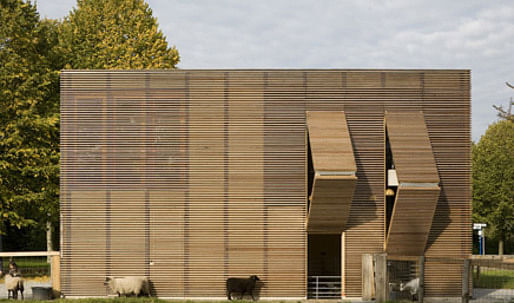
Most city parts of Almere, a city with almost 190,000 inhabitants, have a petting farm. In the 'den Uyl' park there used to be one, but it burned down in the early 80's, leaving only its concrete foundation. Early 2005 we were commissioned by the municipality of Almere to design a new petting farm on the exact location and the remaining foundation. The building was finally built using almost only sponsored money, and finished late 2008.
We designed a wooden box with an open facade system for the upper half of the building, allowing the wind to ventilate the whole farm continuously. Half of the building is stable; the other half consists of toilets, storage and on the second floor an office and storage. The stable itself has no second floor. As you walk lengthways through the building, you will pass the animals that are contained to the left and to the right behind fences.
↑ Click image to enlarge
Petting Farm (Photo: Luuk Kramer, Amsterdam)
↑ Click image to enlarge
Petting Farm (Photo: Luuk Kramer, Amsterdam)
↑ Click image to enlarge
Petting Farm (Photo: Luuk Kramer, Amsterdam)
There are no doors in the building, but there are six shutters, two for the public on the short ends of the building and four for the animals, two on either long side of the building.
These shutters will open manually or automatically in the morning, reacting on the upcoming sun, as they will close again at the end of the day, when the sun goes down. The animals will easily learn to be inside again on time, if they like.
↑ Click image to enlarge
Petting Farm (Photo: Luuk Kramer, Amsterdam)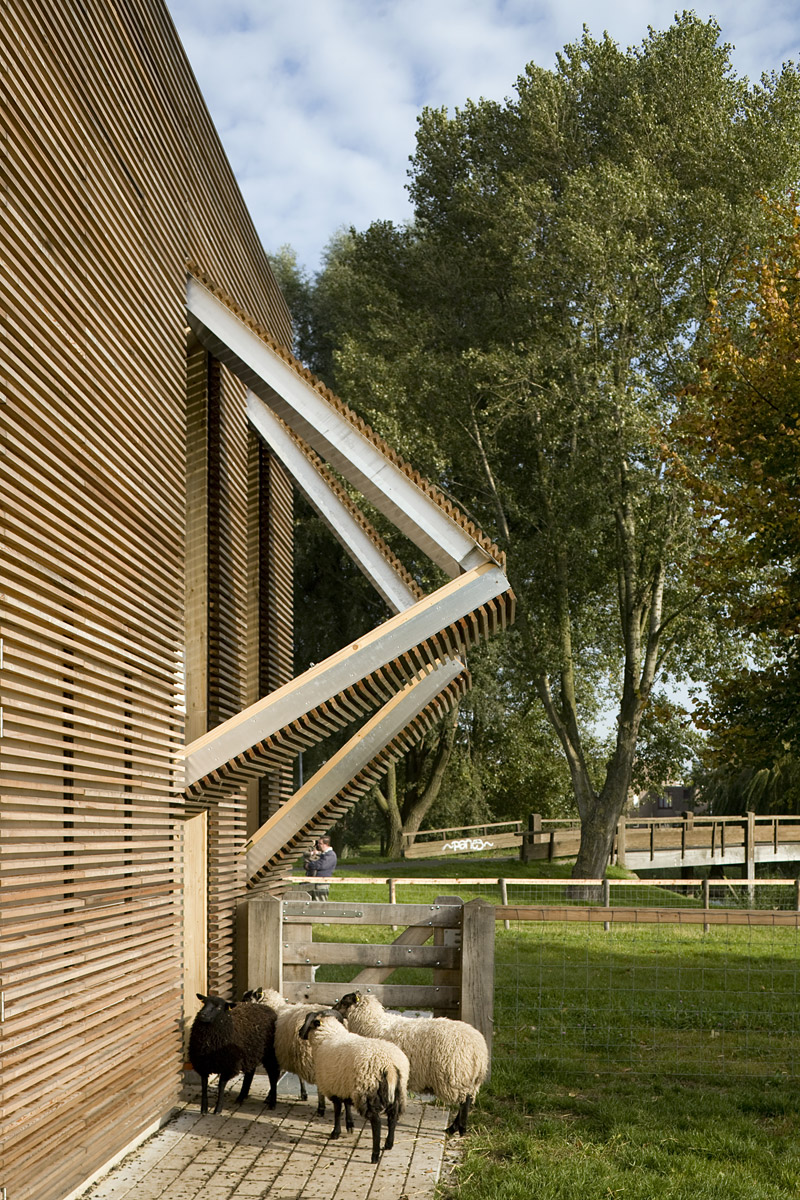
↑ Click image to enlarge
Petting Farm (Photo: Luuk Kramer, Amsterdam)
↑ Click image to enlarge
Petting Farm (Photo: Luuk Kramer, Amsterdam)
↑ Click image to enlarge
Petting Farm (Photo: Luuk Kramer, Amsterdam)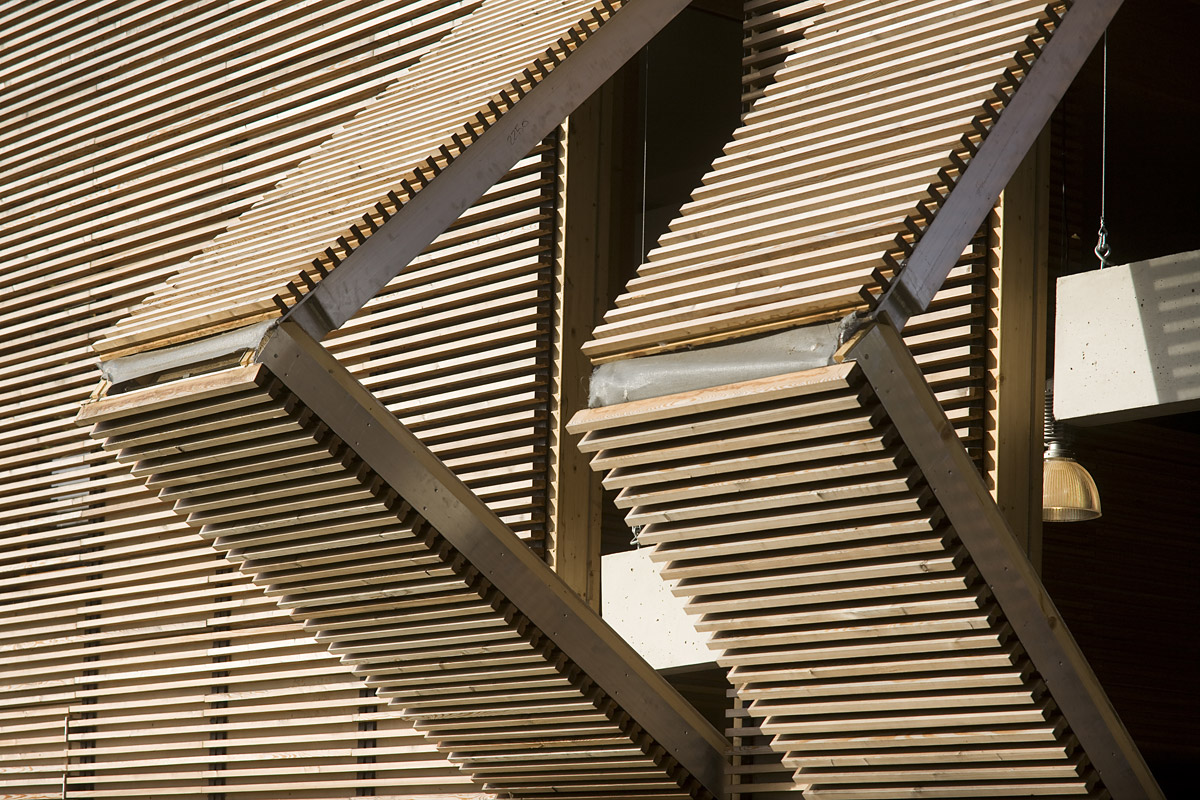
↑ Click image to enlarge
Petting Farm (Photo: Luuk Kramer, Amsterdam)
↑ Click image to enlarge
Petting Farm (Photo: Luuk Kramer, Amsterdam)
↑ Click image to enlarge
Petting Farm (Photo: Luuk Kramer, Amsterdam)
At night, the building becomes a light beacon in the park.
One could say that the box, a building extensively reduced in aesthetic violence, wakes up and goes to sleep every day.
↑ Click image to enlarge
Petting Farm (Photo: Luuk Kramer, Amsterdam)
↑ Click image to enlarge
Petting Farm (Photo: Luuk Kramer, Amsterdam)
↑ Click image to enlarge
Petting Farm (Photo: Luuk Kramer, Amsterdam)
↑ Click image to enlarge
Petting Farm (Photo: Luuk Kramer, Amsterdam)
↑ Click image to enlarge
Petting Farm - Site Plan
↑ Click image to enlarge
Petting Farm - Ground Floor
↑ Click image to enlarge
Petting Farm - First Floor
↑ Click image to enlarge
Petting Farm - Sections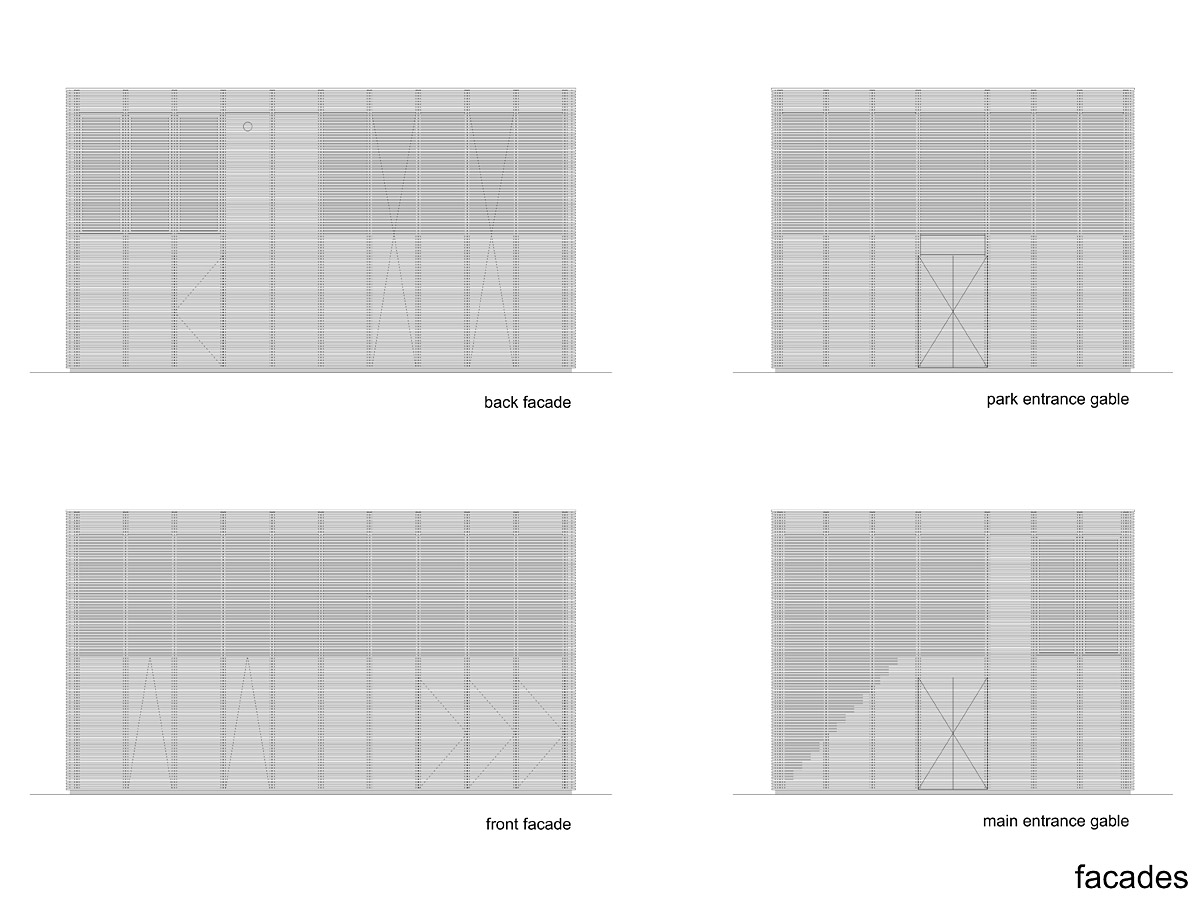
↑ Click image to enlarge
Petting Farm - Facades
70F
70F architecture is a growing office, combining the three major elements in design; architecture, interior design and design. The two partners have built up experience in all fields working in other offices and have started for themselves in 1999.
Bas ten Brinke was born in Amsterdam, the Netherlands, in 1972 and got his diploma in architecture from the Technical University in Eindhoven in 1995.
Carina Nilsson was born in Lund, Sweden, in 1970 and got her degree in architecture from Chalmers Technical University, Gothenburg, in 1998. Before that she studied sculpture, drawing and jewelery making at Lawrence University, USA.
Creative Commons License
This work is licensed under a Creative Commons License .
/Creative Commons License

14 Comments
A great building, I like the folding doors, like Calatrava's garage!
Lucky pets!
It bothers me tat sheep have a nicer home than my own, but c'est la vie.
Great project.
nice project... cool architecture for the hip sheep
What type of wood creates the scrim/screen? Does the wood have a finish or sealant on it?
There is little information about the actual construction of the project. This goes for a lot of the projects.
I like it when sweet architecture can happen in seemingly mundane places. Petting zoo. Kind of like that storage shed from a few weeks ago. Lucky sheep, I agree.
not baaaaaaaaad.
nicee concept but the skin is a rip off from the CARTER TUCKER house by SEAN GODSELL
http://www.pushpullbar.com/forums/attachment.php?attachmentid=3769&stc=1&d=1127523055
Farmers have been using those slats on corn cribs since long before Sean Godsell was born, that's more than likely where the exterior cladding idea came from in both cases.
OK, this ubiquitous skin type, the big wall of wood slats, has just jumped the shark. For a petting zoo? Seriously? This abstract, reductivist, banal surface just sucks the life out of what should be a really fun, kid friendly, publicly responsive addition to the park. Hey, I'm as much a modernist as anyone else reading this blog, but I'm also a parent. While I agree that the project is a beautiful object, and has all the traits taught in school (tectonic elegance, formal clarity, etc.), if you step back and just consider the overall appropriateness and contribution to the place, it's a thin gruel indeed. Only (young) architects and their sycophants will walk by and say "Oooo, look, glowing light box! Vertically articulated openings!". Most will think "What are those sheep doing next to that transformer?" That is not, actually, a good thing (even though you think it is). I'm beginning to think that, in some ways, Venturi was right after all!
yes, godsell is not the originator for this facade, or even his own.
he's a digester.
"combining the three major elements in design; architecture, interior design and design."
I love this sentence.
Thumbs up arktek.
I would have loved to see a more in depth blurb about the choice of facade, beyond the fact that it moves / allows for ventilation.
Overall I find the concept a little wooly.
This is an attractive barn design. It would be impracticable for the more northern climates, but would be very good for the Southernmost United States.
I like the idea of automation. on the shutters. The addition of side to side bi-fold doors wouldn't have detracted much from the cohesive photogenic impact.
Block this user
Are you sure you want to block this user and hide all related comments throughout the site?
Archinect
This is your first comment on Archinect. Your comment will be visible once approved.