


Off-Grid Scenarios: solutions for the endless city was recently chosen by Mark Linder of Syracuse University, Stanley Tigerman of Tigerman McCurry Architects and Sarah Whiting of Princeton University as "best in show" at UIC, an annual award given to the top project of the school. The studio, which was led by Alexander Lehnerer of the ETH Zurich, was titled Chicago Rules: inclusionary regimes within the American city .
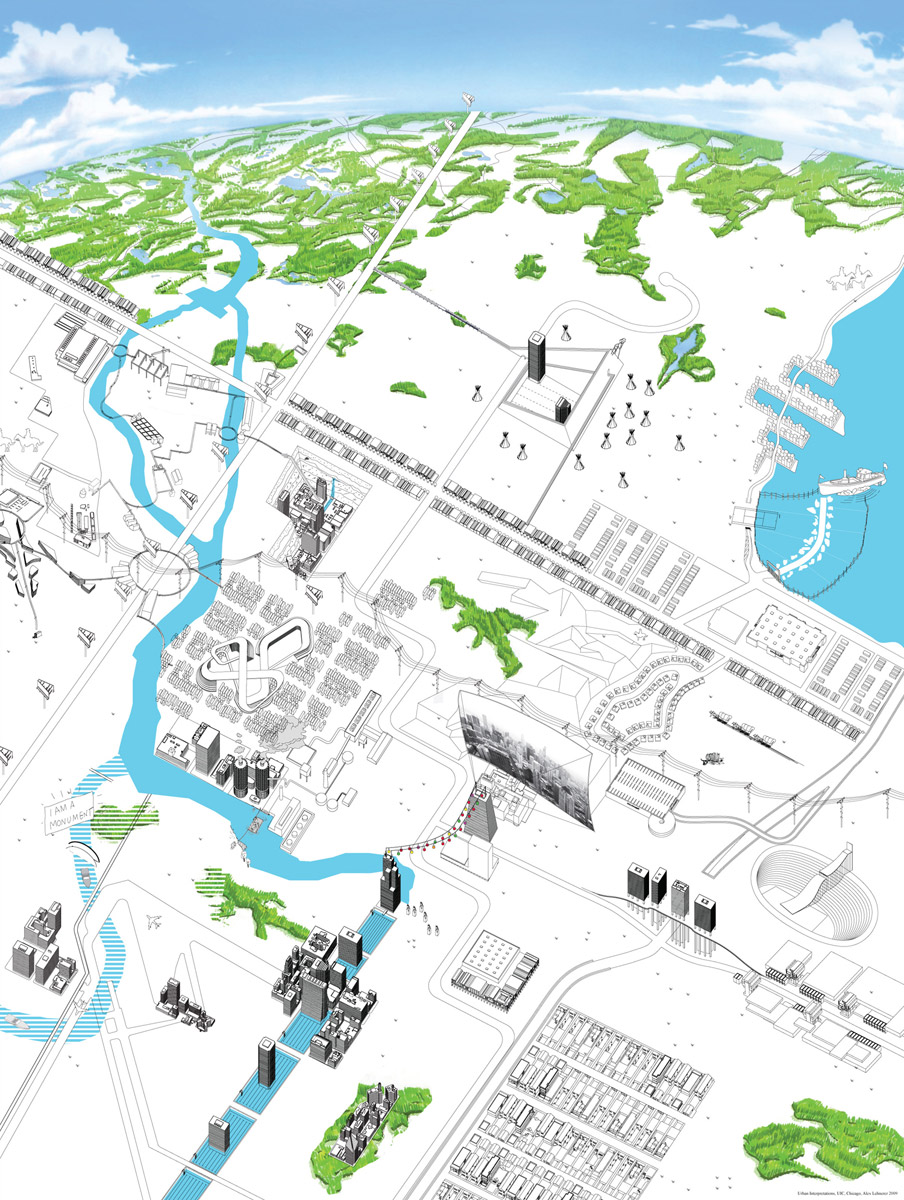
Capable of existing in any American city, ‘off-grid scenarios’ is tested in Chicago, the city that has been historically described as the endless city. In Chicago, disturbances within the grid provide foundations for opportunities and create difference for the city. In order to emphasize these moments, we propose turning them into a new monumental system or infrastructure, which reflects its context and re-uses it in a new, experimental way. These new urban monumental infrastructure questions ‘building-as-landscape’ scenarios, begging the question of what kind of building the city becomes. Historically, the pre-existing layered infrastructures of American cities like Chicago have already informally addressed this phenomenon. Our proposal takes this notion of city-as-building to the next level, giving it a sense of monumental importance. In addition, the proposed scenarios establish new connections with the existing urban grid, a defining characteristic of American cities.
↑ Click image to enlarge
Chicago Is All There Is. (Urban Interpretations on the city - Studio Alex Lehnerer)
American cities, like Chicago, are about to gain new additions to their skylines. Except this time it is different: no one can find them; they seem to be invisible and unnoticeable amongst a crowded downtown.
↑ Click image to enlarge
A new kind of building for the city - Grant Park perspective
The buildings’ height is revealed; an astonishing (negative) 1200 ft. Slowly an inversion occurs, skylines no longer tower to the clouds, but instead, extend far below the surface of the earth. Alleys turn to bridges, garages to entries and what we used to know as ground turns to rooftop. They have become endless cities surpassing any norms of traditional urban planning.
↑ Click image to enlarge
The City becomes the building - Michigan Avenue
Because these inverted moments exist within the grid but act beyond it, they allow for new freedoms to evolve. The strange duality of these inverted monuments is that, for all practical purposes, they remain invisible to a city’s skyline, but at the same time the grid and the city cannot exist without them.
↑ Click image to enlarge
A hypothetical city – off-grid arrangements
Their substantial presence within the city gives them a monumental quality, becoming not upright monuments, but inverted ones. Within the inversion, the existing infrastructures and buildings become integrated into a single interconnected space, which acts simultaneously as a new infrastructure, architecture and city. Transportation no longer exists as a freestanding system, but becomes an interconnected built mass.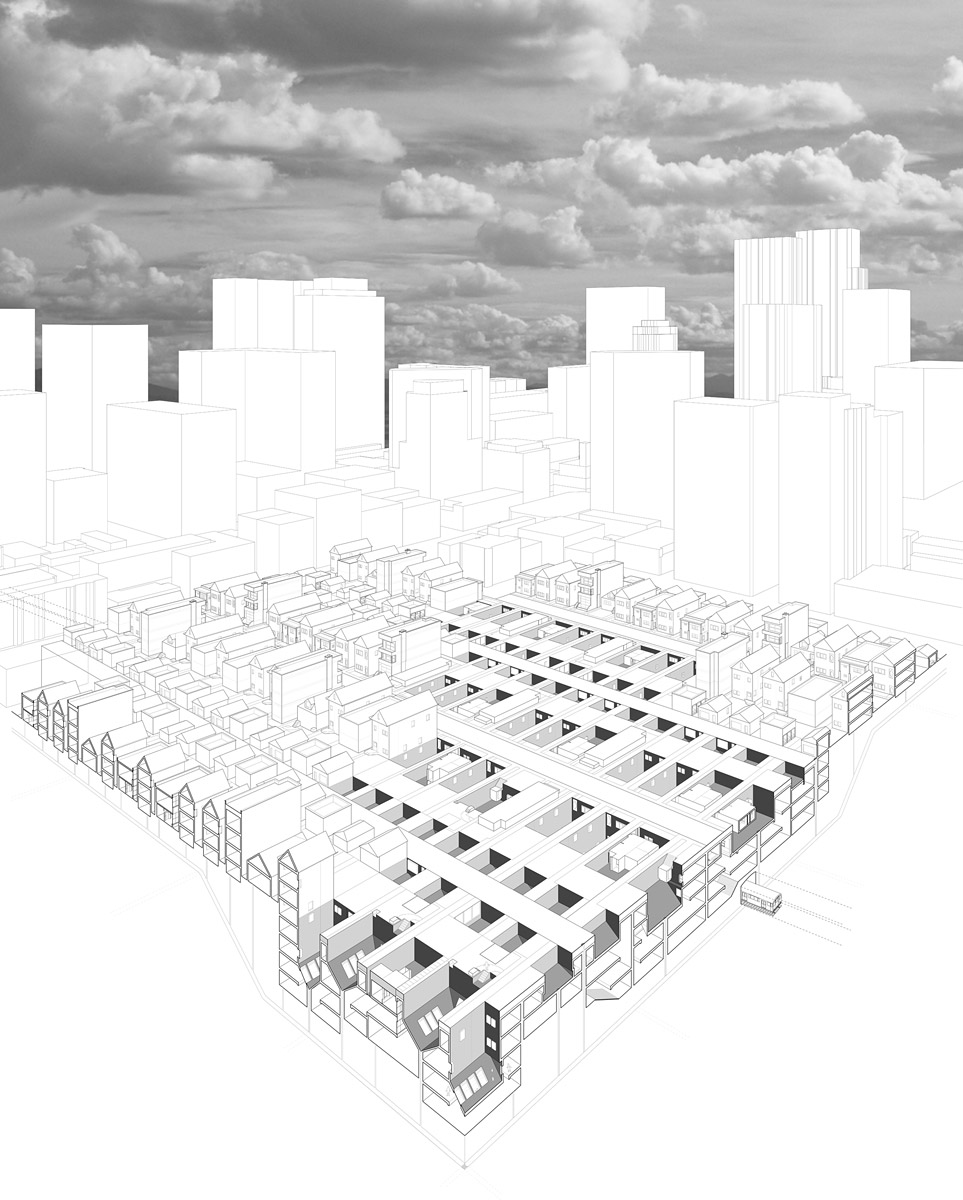
↑ Click image to enlarge
Residential neighborhood Section perspective
These new urban monumental infrastructures begin to challenge ‘building-as-landscape’ scenarios, begging the question of what kind of building the city becomes. Off-grid scenarios take this notion of city-as-building, building-as-city to a suggestive level, giving it a sense of monumental importance with monumental ramifications.
↑ Click image to enlarge
The Chicago Grid
↑ Click image to enlarge
Diagrammatic arrangements of the city
Urban Interpretations at UIC, Chicago – 12 Basic Points
by Alex Lehnerer
↑ Click image to enlarge
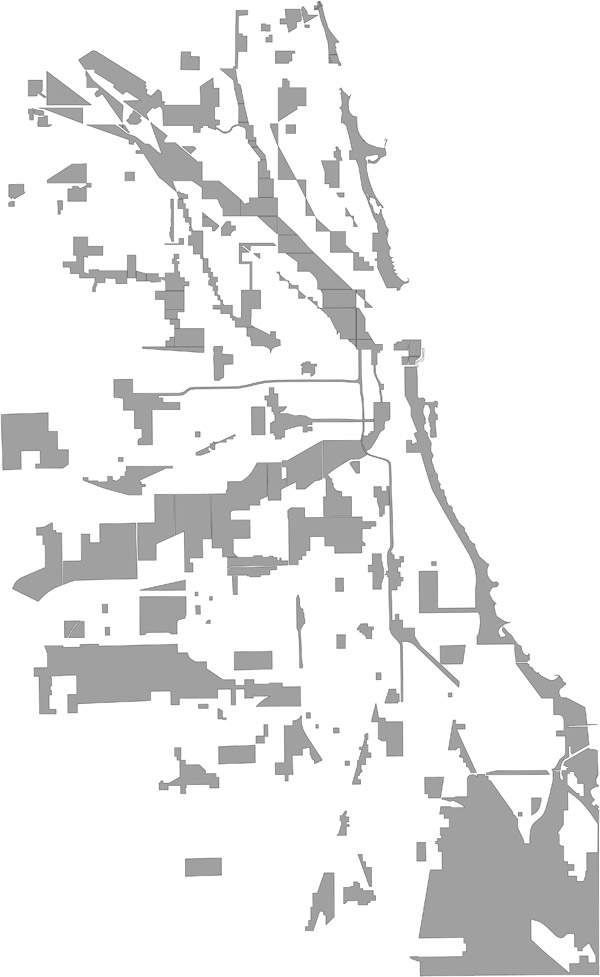
Off-Grid moments in Chicago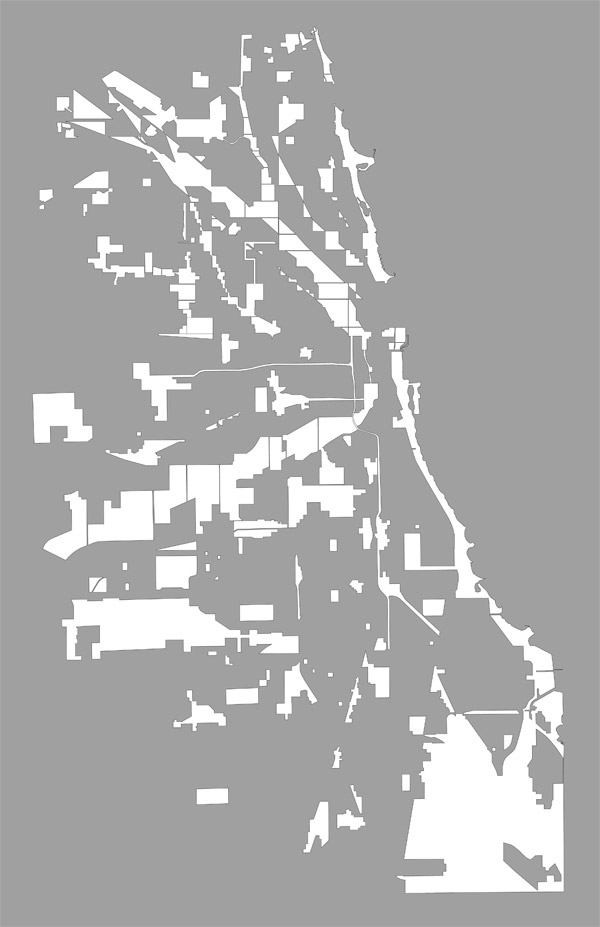
↑ Click image to enlarge
Grid becomes the exception in the city
↑ Click image to enlarge
Realities - A collection of Off-Grid moments
↑ Click image to enlarge
New Urban Skyline - City becomes the building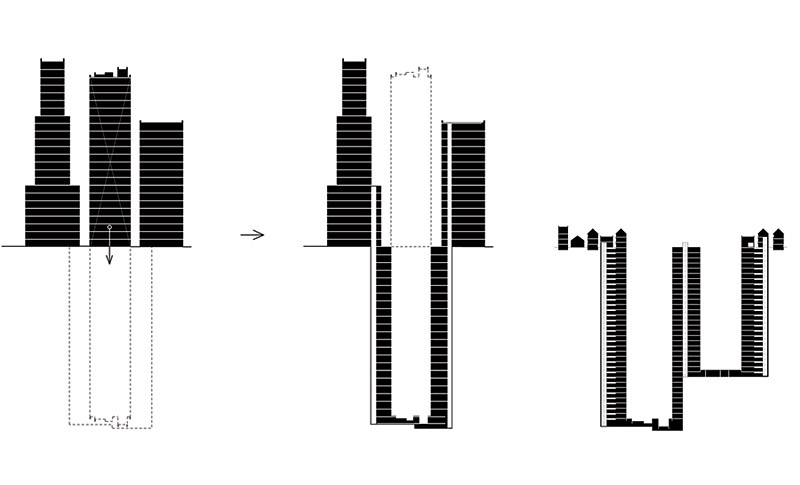
↑ Click image to enlarge
Urban and Mixed-Use inversion
↑ Click image to enlarge
Off-Grid Advantage, residential inversion
↑ Click image to enlarge
New residential topography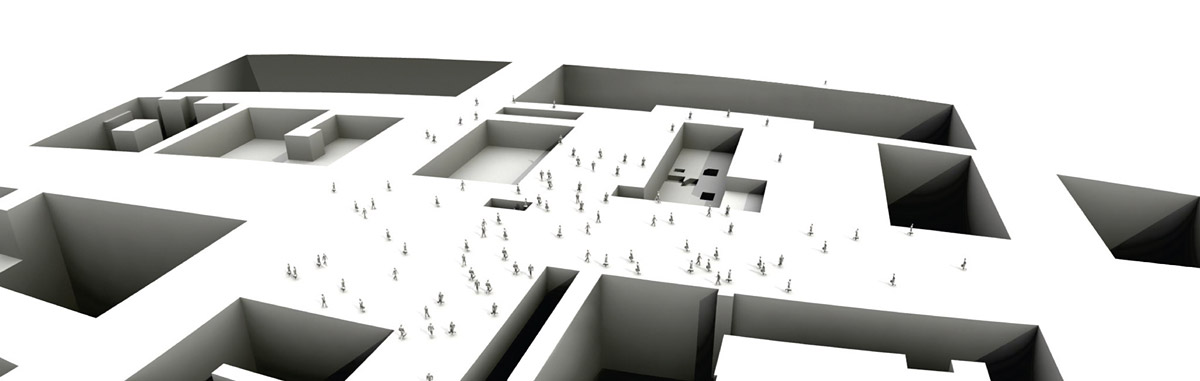
↑ Click image to enlarge
New Monuments in the city
↑ Click image to enlarge
Conceptual model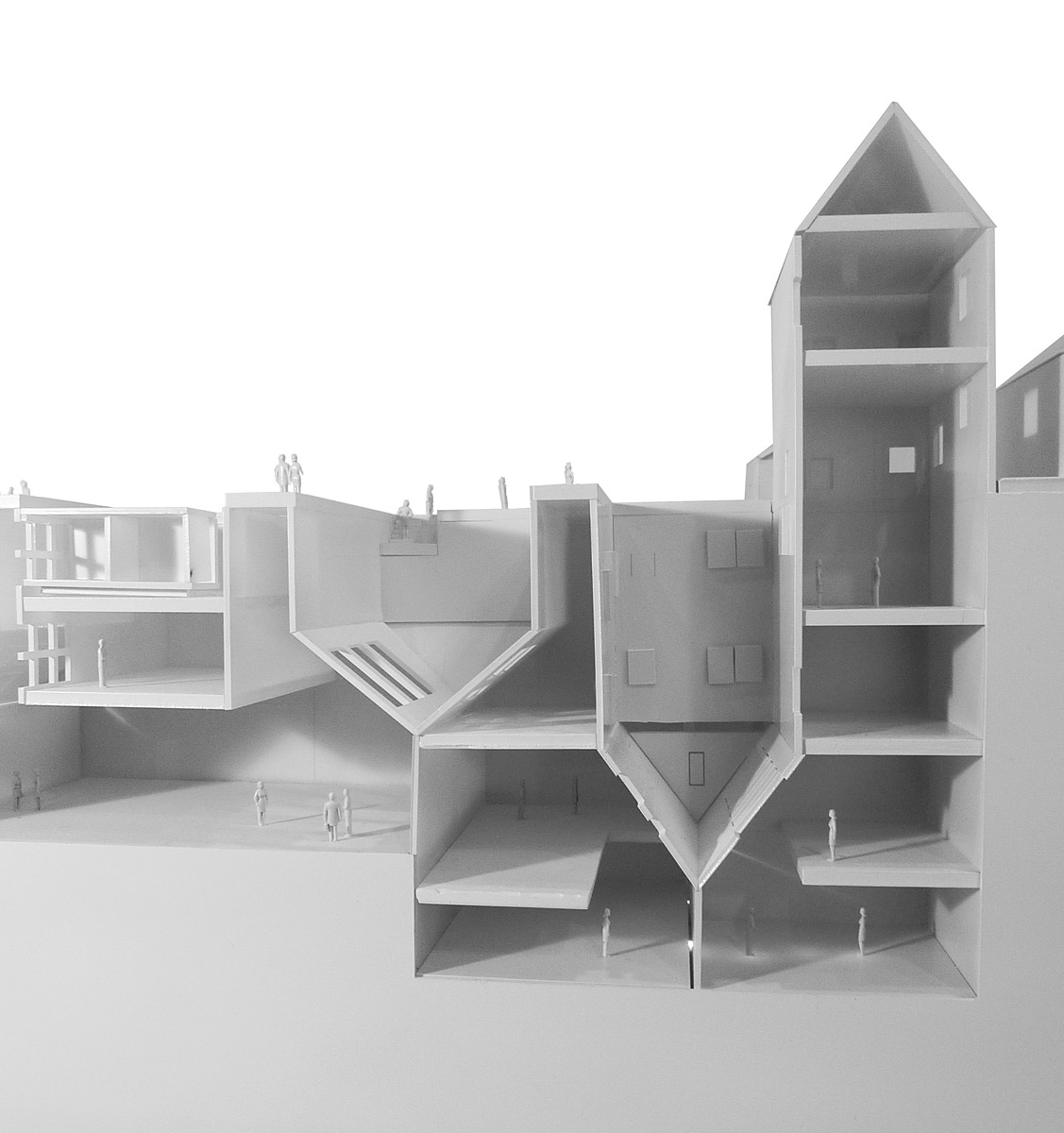
↑ Click image to enlarge
Model - residential section
↑ Click image to enlarge
Model - residential section
↑ Click image to enlarge
Model - A new Chicago Row House
↑ Click image to enlarge
Model - new living scenarios
Ryan Johnson is a recent newcomer to the Chicago scene, but likes what he sees. He came to Chicago after studying architecture at the University of Kentucky in Lexington, KY. Ryan has been a Designer at Paul Preissner Architects in Chicago since 2008, he has also taught Digital Design Courses at the University of Illinois-Chicago.
Ryan Holds a Bachelor of Arts in Architecture from the University of Kentucky and a Master in Architecture from the University of Illinois-Chicago, where he received the Henry Adams Medal of Merit.
Darya Minosyants moved from Uzbekistan to Chicago in 2001, where she has studied architecture at the University of Illinois-Chicago for the past six years. Darya holds a Bachelors of Science in Architecture and a Masters of Architecture from UIC, where she has studied under Robert Somol, the new Director of Architecture at UIC, Andrew Zago and most recently, Alexander Lehnerer.
While being in Chicago, she has had the great privilege to work in many of Chicago's award wining architecture offices, including SOM, Gensler, Ross Barney and LEGAT. For the past two years Darya has served as a Teaching Assistant for Second Year Undergraduate Studios and a graduate level Architectural Technologies class.
For more info, portfolio and resume, please visit darya-web.com .
Alex Lehnerer is an architect and urban designer with his office ALSO Architekten , currently teaching and doing urban research as Assistant Professor at UIC School of Architecture in Chicago.

19 Comments
This is fantastic.
Love the below-ground sci-fi living scheme.
I think that this is an interesting concept... To rethink what a city does and is and can be...
I enjoy the diagrams showing the literal flip of the city skyline to create the underground spaces.
I'm not sure how literally to take this design because of the conceptual quality of its outcome; I feel that this project becomes less about the spaces it's created and more about changing the infrastructure of the modern city, which is a HUGE task in itself. This is what I appreciate most about this project.
I enjoy the idea of the project, but I'm not too sure how much I believe in its outcome...
Practicality?
(excavation, ground water, quality of life, weather)?
I agree with JLC. In concept the idea is extremely interesting, but in execution and practicality...let's just say it should most likely remain in the world of the abstract.
http://www.sincerelsustainable.com
This is awesome Ryan! I'm starting to regret not choosing uic now.... this is really good work.
-andrew pedron
i think this project is superb. I wouldn't worry about the invite to practicality buffet, but you guys know me. congratulations on the work and the post...
p.s. UIC is really rocking it hard.
First, I'll qualify this by saying I like the work going on here, at least formally and graphically.
Having said that, every student as well as the prof knows that entire buildings have been created underground for millennia. For a project that's pushing the idea as an innovation, I'm not so convinced. It's a very interesting idea and one that I think is worth exploring, regardless of concerns over practicality. I know the entire project isn't presented here, but it comes across as a formal solution that appears to be striving to be nothing more than that. The idea is a very rich one, as I said, and it deserves more than a strictly formal exploration, which is what I see here, as unfair as I know that might seem.
Also... the word 'monument' and its variations were used 9 friggin times in the description (plus once in a caption).
I think somebody's feeling inadequate ;)
Great work and great representation. What program was used for the first image?
^ I don't think it's really about "which program". That outcome could be the result of any number of different software platforms.
But if I were to wager a guess, I'd say 3d modeling program (rhino, maya, autocad, etc... maybe even sketchup ) and then some fun with illustrator / Photoshop.
Overall, some nice work. Now I have to go back and read all the text!
I think I think I think, that architects draw and some times make buildings. Drawings inform buildings as much as they describe them, and the inspiration and contribution to architecture here is not in the act of building but the act of drawing so we might build in the city (as we know it) in a more informed more inspired way.
I think this project rocks - you can screw a weep hole if you want to "draw" buildings in school.
Love it.
stillemployed, wtf are you talking about? Did you post this in the wrong comments section? Nobody here even mentioned drawing. Frankie says relax.
stillemployed, you make no sense.
...although "screw a weep hole"... Pretty good one hahahha
...and isnt that what we do in school, "draw" buildings to communicate their spaces?
The presentation is beautiful. But I don't think the project goes far enough conceptually.
Flipping the city inside out is a lovely idea. But it's just a starting point for thinking about how people interact with buildings and city infrastructure. What would happen if a city was built like this? How would people live differently? What new possibilities might open up? Would the city be more fun?
I hope that the people who worked on this project - and everyone reading this feature on archinect - keeps thinking about this idea and takes inspiration from it and doesn't just enjoy the pretty pictures and click on.
somehow this project feels like the ghost of hedjuk visited chicago - very hauntingly poetic.
but, underground buildings is so.... hmmm, 70s in a bad way - like disco. So much thought and effort exploring a dead-end typology. I guess the lessons of Malcolm Wells were never learned or taught to the critic and students.
Formally like the project, but I feel it’s a bit empty beyond the pretty graphics. What are we really achieving beyond monumentality? I’m assuming there is more to it than represented here, but I’d like to see a bit more meat to the concept. Where are the people in this proposal? Anyway, the imagery is definitely good looking.
Hello,
I like the concept.
Your project reminds me the first answering about town planing, (the hygienist period). I mean how can we built a healthy city.
It's a good idea but can you explain how can people breathe in this kind of buildings.
Have you ever thought about hygiene basics ? (sun, air, light).
Elisa
Are student able to question the state of the today's world?
What is the meaning of such Post-Post neo modernism project??
Living like worms?
JUST AWFUL!!!
NUZTLOS!!
promising title, but after i looked at images and read the text i'm quite disappointed. i haven't seen anything in this project that suggests "Off-Grid Scenarios" . only because you invert the boxes to go underground doesn't mean you are not using an existing grid. This idea is as two dimensional as the grid they are trying to break free from. And I am sorry but inverting buildings is just too easy of a solution , which seems intriguing if the thinking process is not fully engaged.
But the graphics are excellent. but unfortunately they create a false impression of thought provoking project.
Block this user
Are you sure you want to block this user and hide all related comments throughout the site?
Archinect
This is your first comment on Archinect. Your comment will be visible once approved.